Modeling and simulating Chinese cross-border e-commerce: an agent-based simulation approach

Share
Modeling and simulating Chinese cross-border e-commerce: an agent-based simulation approach
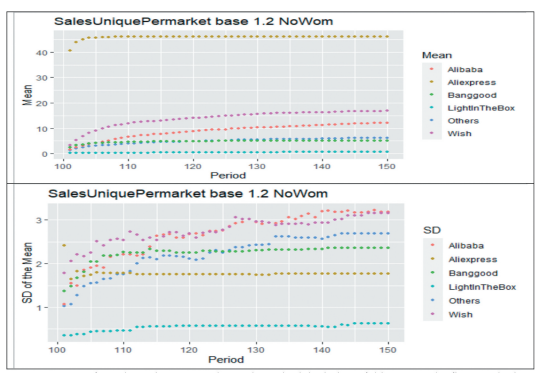
A new paper has been accepted in Journal of Simulation, where the authors: Oswaldo Téran, Paul Leger, Manuela López (https://doi.org/10.1155/2021/6760920) . Here is the abstract:

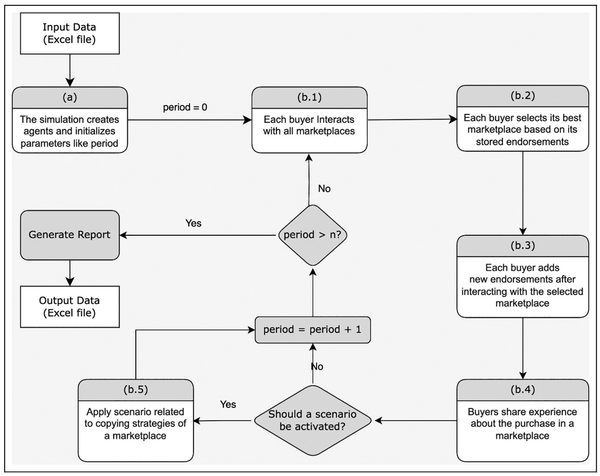
Chinese cross-border e-commerce has become the largest in the world, overtaking US e-commerce and representing about 40% of total global e-commerce spending in 2018. This market is highly complex, uncertain, and poorly understood. Surveys and statistics have been used to characterise it, but new approaches are required to better understand its complexity. To address this gap, we present an agent-based model of Chinese cross-border e-commerce.
For a realistic representation of the buyers’ decision-making mechanism and some elements of their communication, including word of mouth (WOM), we use endorsements theory, and a survey is used to specify the model. The aim of the study is twofold: (1) to present an agent based simulation (ABS) model of the Chinese cross-border e-commerce market; and (2) to illustrate the potential of the model to explore future possible configurations of the market and to guide stakeholders’ decision making.
Read more

Factors that Drive Market Share and the Oligopolistic Character of Cross-border B2C Ecommerce: An agent-based scenario analysis approach

Factors that Drive Market Share and the Oligopolistic Character of Cross-border B2C Ecommerce: An agent-based scenario analysis approach

We have published this paper in the journal Simulation: Transactions of the Society for Modeling and Simulation International. DOI: https://doi.org/10.1177/00375497241296542 ABSTRACT: Business-to-Consumer (B2C) e-commerce has become a dominant, continuously evolving force in global retail. Most consumers today make cross-border purchases in

By Paul Leger
Efficiency Analysis of Engineering Classes: A DEA Approach Encompassing Active Learning and Expositive Classes Towards Quality Education

Efficiency Analysis of Engineering Classes: A DEA Approach Encompassing Active Learning and Expositive Classes Towards Quality Education

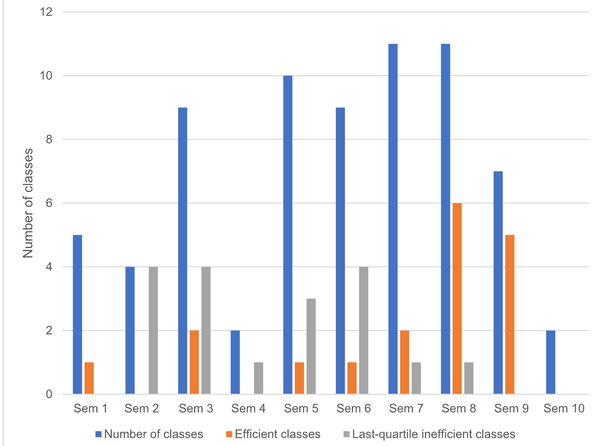
We have published in the journal Environmental Science & Policy. DOI: https://doi.org/10.1016/j.envsci.2024.103856 ABSTRACT: The science, technology, engineering, and mathematics (STEM) education research delves into the core of sustainable development goals (SDGs), including the pillars of quality education (SDG4), robust economic growth (SDG8)

By Paul Leger